

Synopsis
The Palace of Illusions by Chitra Banerjee Divakaruni is a retelling of the Mahabharata from the perspective of Panchaali (Draupadi). Born from fire, she navigates a world of power, desire, and destiny while challenging the constraints of a patriarchal society. The novel explores themes of identity, agency, and the pursuit of understanding amidst illusion and conflict.
The Problem
The Mahabharata is one of the most epic, sprawling stories ever told — but this wasn't about the war. The Palace of Illusions is Draupadi's story, and it needed a title sequence that honored that intimacy without shrinking from the scale.
The Thinking
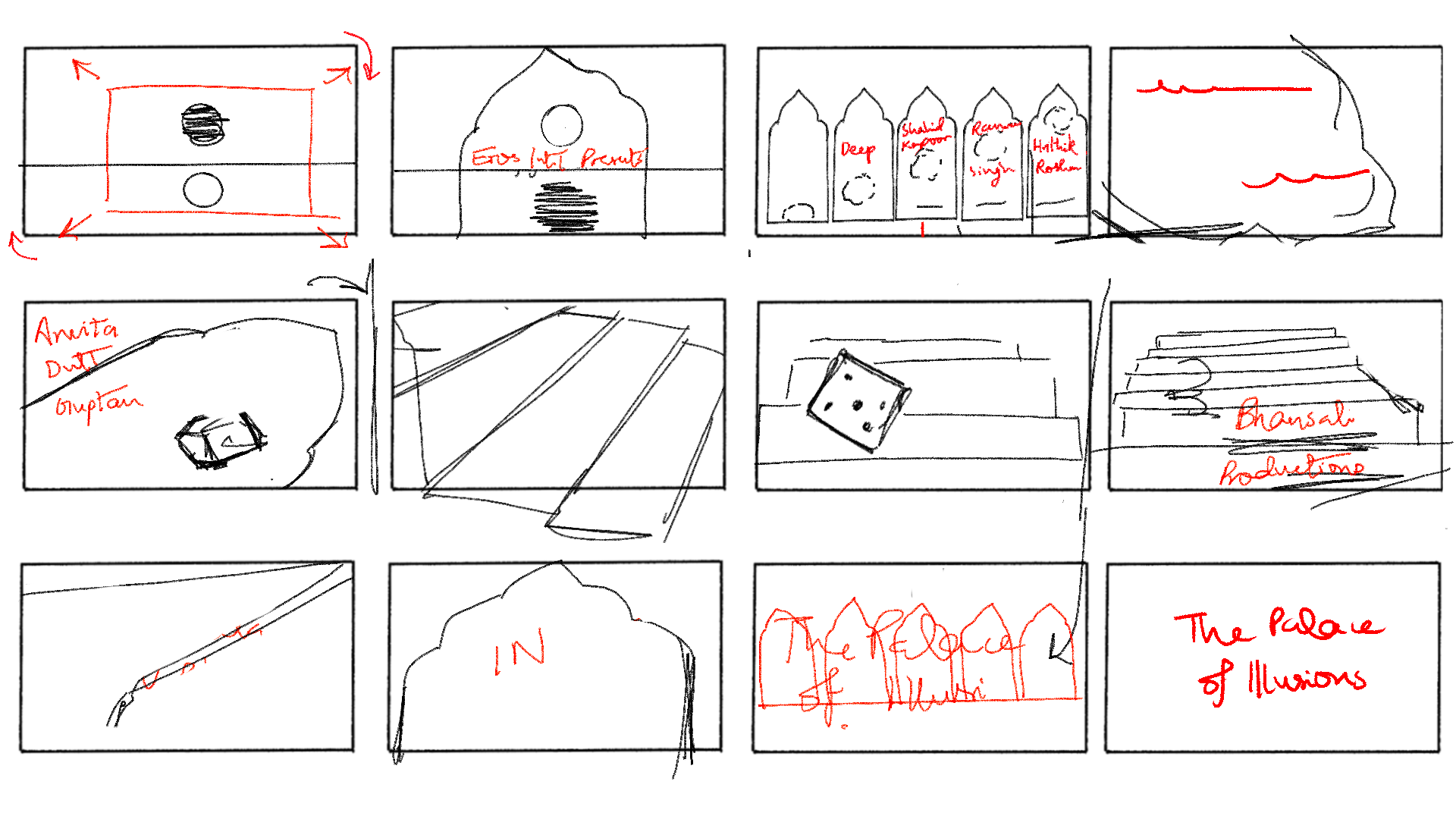
The first thing that struck me in the book was her relationship with the palace at Indraprastha — a place so extraordinary you couldn't tell water from sky, or walls from their own reflections. It felt like the only narrator that could hold her entire story. So instead of depicting Draupadi directly, I let the palace tell it.
Each incident unfolds through the architecture itself. Her birth — sudden, luminous, inevitable — becomes the sun rising over the palace for the first time. Her marriage to five brothers becomes that same sun crossing five windows, one for each year she belonged to a different man. The turning point — her humiliation, her curse — is the moment the palace begins to fracture. And when her husbands lose everything in the wager, the palace doesn't fall. It simply disappears. Because without its rightful owners, it was never really there.
Storyboards
Visual Development



Styleframes